
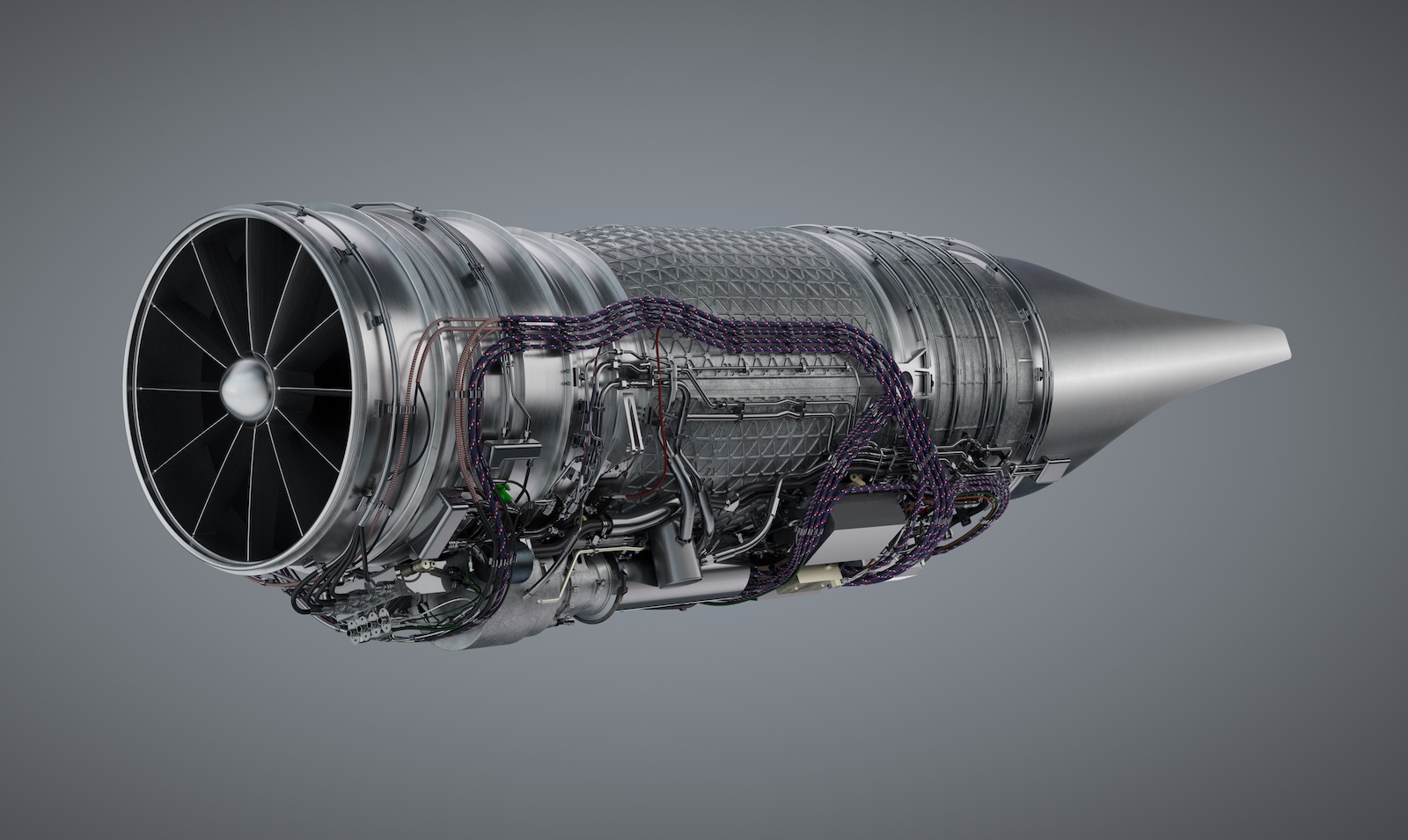
GE Aerospace is moving closer to assembling the first XA102 test engine under the U.S. Air Force’s NGAP program. The company is currently procuring hardware and testing subcomponents. A key element of the program is the engine’s fully model-based development and manufacturing approach.
The XA102 is being developed as part of the Next Generation Adaptive Propulsion (NGAP) program for future combat aircraft. Technologically, GE Aerospace is building on experience gained from the earlier XA100 program, including adaptive engine cycles, thermal management, fuel efficiency and advanced design methods.
Pratt & Whitney is also developing an engine for the NGAP program. Its XA103 has likewise entered the hardware phase, with Pratt & Whitney preparing a prototype for ground testing scheduled for the late 2020s.
“Our team is working with suppliers to procure hardware and test subcomponents as we prepare to assemble the first XA102 test asset,” says Jorge Perez, General Manager, Edison Works Advanced Combat Engines at GE Aerospace. Lessons learned from the XA100 program provide the foundation for advancing adaptive-cycle engine technology and supporting the Air Force’s goals for next-generation propulsion.
XA102 developed entirely using Model-Based Definition
According to GE Aerospace, the XA102 is the first engine to be developed entirely using Model-Based Definition (MBD) from design through assembly. Instead of traditional two-dimensional drawings, a machine-readable digital model provides the complete product definition.
MBD links design, manufacturing and inspection. The data can be fed directly into downstream production processes. GE aims to use this approach to reduce development time and cost and is extending model-based methods into manufacturing, inspection and assembly.
Suppliers are also being integrated into the digital process. GE Aerospace is supporting them in using model-based design data within their own manufacturing and inspection workflows. Demonstrations of these engineering methods were completed during the first phase of the program.
Image: GE Aerospace