
Translation note: This article was translated with the assistance of AI.
Following the collapse of the joint fighter jet development effort under the Franco-German-Spanish Future Combat Air System (FCAS) program, Airbus is exploring new opportunities for cooperation. According to a report by the Financial Times, Airbus representatives are expected to meet with BAE Systems next week to discuss potential collaboration on the Global Combat Air Programme (GCAP). Led by the United Kingdom, Italy, and Japan, GCAP aims to develop a sixth-generation fighter aircraft for service entry by 2035.
Airbus and BAE Systems Plan Talks on GCAP
According to an October 25, 2026, report by the Financial Times, executives from Airbus and BAE Systems intend to explore opportunities for cooperation on future military aviation systems. The discussions are expected to focus on potential Airbus involvement in the Global Combat Air Programme (GCAP), which is being jointly pursued by the United Kingdom, Italy, and Japan.
A possible move toward GCAP would not come as a surprise. Reports of preliminary discussions between Germany and the United Kingdom had already emerged in September. In early October, the British government officially signaled its openness to German participation. The German government subsequently confirmed that it was examining the possibility. The planned talks between Airbus and BAE Systems could now bring these discussions to the industrial level.
GCAP: Sixth-Generation Fighter Aircraft Targeted for 2035
The program aims to deliver a sixth-generation fighter aircraft that is scheduled to enter service in 2035. The concept incorporates stealth capabilities, advanced sensors, digital connectivity, and artificial intelligence. Cooperation with autonomous uncrewed aircraft is another key technological focus.
FCAS: Why the European Fighter Jet Project Collapsed
The planned discussions follow the collapse of the joint fighter aircraft development effort under the Future Combat Air System (FCAS). Germany, France, and Spain had intended to develop a new crewed fighter aircraft capable of operating alongside uncrewed aircraft and connected through a digital network architecture.
The program’s principal industrial partners were Airbus, Dassault Aviation, and Indra. However, Airbus and Dassault remained at odds over industrial leadership, development responsibilities, and the division of work on the crewed fighter aircraft.
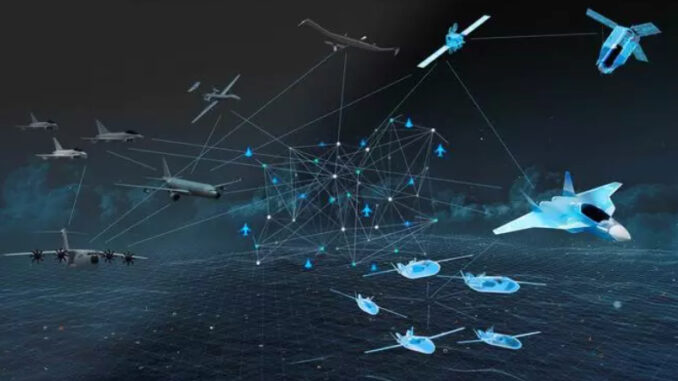
In June 2026, the joint development effort was ultimately discontinued. Other elements of the FCAS concept, particularly the Combat Cloud intended to connect crewed and uncrewed systems, are expected to remain under consideration.
France is now pursuing a national fighter aircraft program as a long-term successor to the Rafale. Germany, meanwhile, is exploring potential international partnerships. In addition to joining GCAP, cooperation with Sweden and aerospace and defense company Saab is also being considered.
Joining GCAP Would Present Industrial Challenges
Airbus has made clear that any potential cooperation would need to include substantial development responsibilities. According to the Financial Times, the planned discussions are therefore expected to extend beyond the crewed fighter aircraft itself.
Potential areas of cooperation also include autonomous uncrewed aircraft and the Combat Cloud. This digital architecture is intended to connect fighter aircraft, drones, sensors, and other military systems.