
Translation note: This article was translated with the assistance of AI.
The DLR Institute of Test and Simulation for Gas Turbines commissioned its new component test rigs at the Innovation Park Augsburg on October 1, 2026. Four MTC test rigs combine mechanical, thermal and chemical loads on material specimens, while a rotor test rig allows full-scale components to be examined under rotational conditions. The institute building had already opened on March 25, 2025.
Four test rigs reproduce combined loading conditions
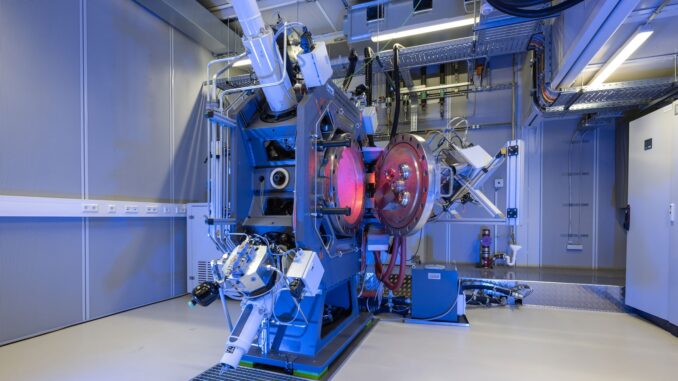
The four mechanical-thermal-chemical, or MTC, test rigs are designed to reproduce the simultaneous loads experienced by materials in gas turbines. A laser system heats specimens to temperatures of up to 1,400 degrees Celsius. Inside a pressure vessel, gas compositions representing typical exhaust gases or individual exhaust constituents can be generated at pressures of up to 20 bar.
Tests can run for as long as 100 days. A high-resolution camera system monitors strain and crack formation in real time.
The MTC biaxial test rig uses two servo-hydraulic actuators per axis and can apply loads of up to 100 kilonewtons per axis at frequencies of up to 10 hertz. It can also be converted for fretting fatigue testing, which examines fatigue damage caused by small relative movements at contacting surfaces.
The MTC creep test rig investigates creep-fatigue interaction under loads of up to 50 kilonewtons. It can additionally apply cyclic torque under corrosive environmental conditions.
For uniaxial testing, DLR operates a servo-hydraulic rig with a load range of ±100 kilonewtons and frequencies of up to 30 hertz. It can be used for tensile fatigue testing, bending tests and crack propagation studies.
The MTC VHCF test rig uses an electrodynamic resonance testing machine operating at 1,000 hertz and ±15 kilonewtons. VHCF stands for Very High Cycle Fatigue. The setup enables lifetime testing up to 10⁹ load cycles.
Rotor test rig targets secondary air systems
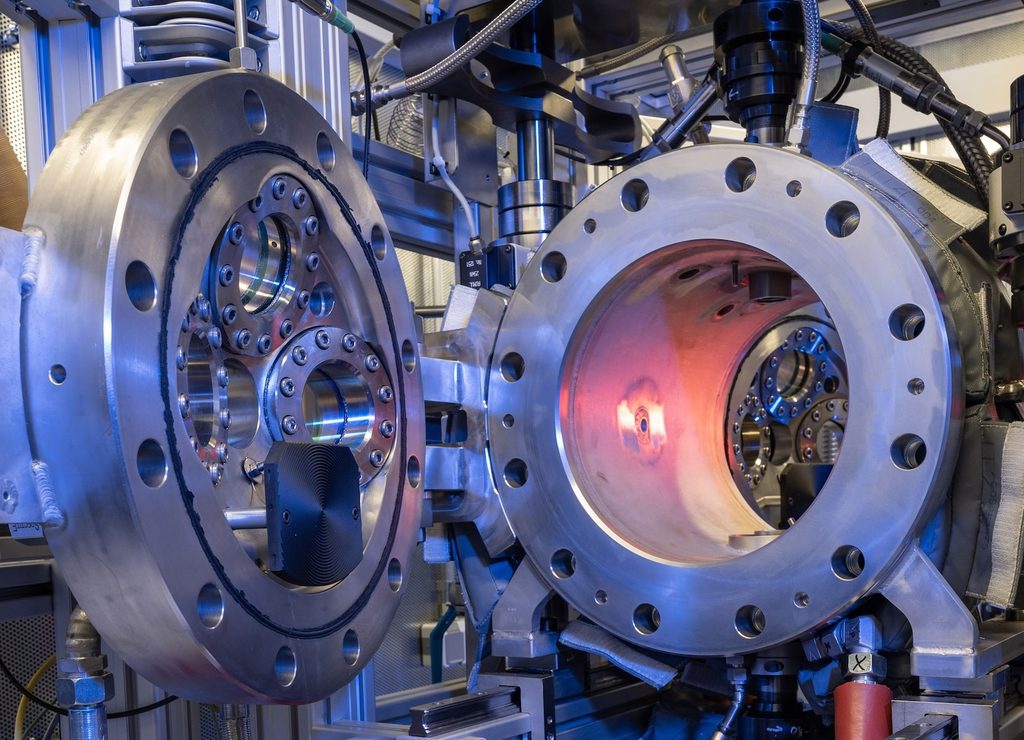
The new rotor test rig allows components to be tested at full scale while exposed to rotational forces. One area of research is the secondary air system of a gas turbine. Up to 20 percent of the total airflow can be routed away from the main gas path, for example for cooling, sealing and other internal functions.
Brush seals are the first components being investigated on the new rig. It can operate at up to 27,000 rpm with a drive power of 170 kilowatts. The air supply reaches up to one kilogram per second, while test conditions can include pressures of up to 15 bar and temperatures of up to 500 degrees Celsius.
The test section is modular and can be adapted for additional components of secondary air systems.
Material analysis available on site
The test infrastructure is complemented by facilities for material and damage analysis. The institute has metallographic and microscopy capabilities as well as a scanning electron microscope, allowing specimens to be examined in detail after testing.
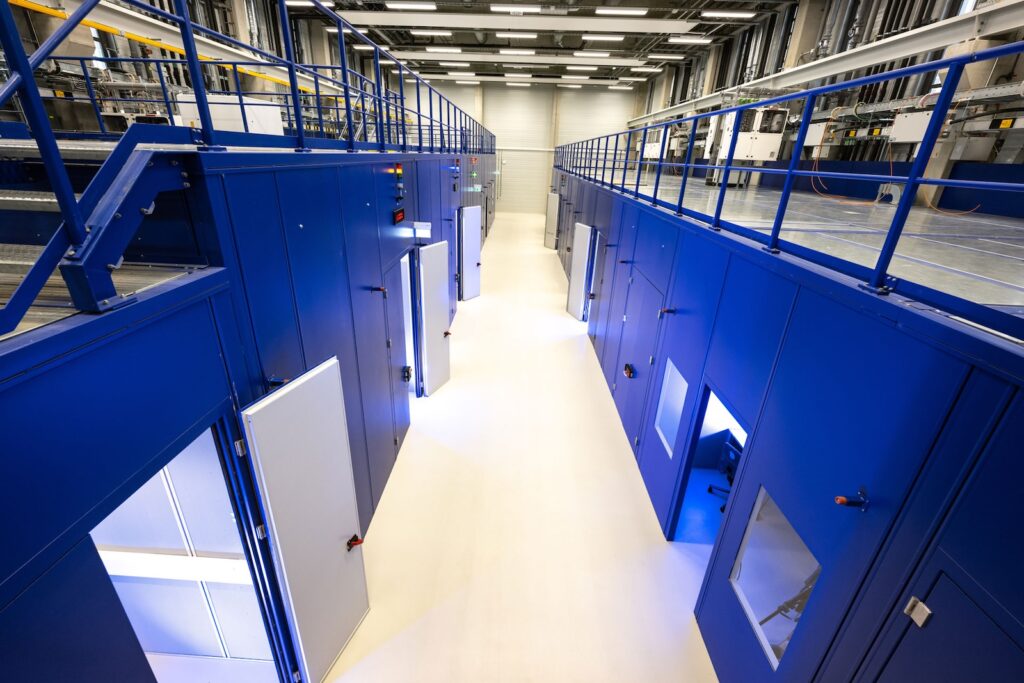
The DLR Institute of Test and Simulation for Gas Turbines is headed by Prof. Sabine Ardey. The new test infrastructure was funded by the Bavarian State Ministry of Economic Affairs, Regional Development and Energy.
Images: DLR – Luftfahrt