
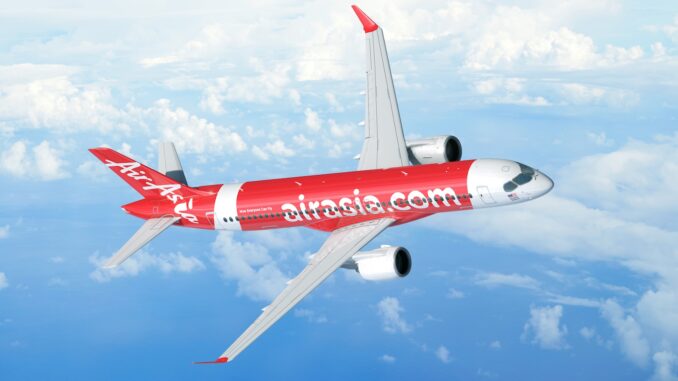
An aeroplane is not controlled by a control surface pushing it directly in one direction. Ailerons, elevators, rudders, flaps and spoilers alter local aerodynamic forces; the resulting moments cause the aeroplane to rotate about its longitudinal, lateral and vertical axes.
Three axes, multiple control surfaces
Ailerons generate roll torque, the elevator influences pitch movement and the rudder affects the yaw axis. In commercial aircraft, however, these surfaces do not operate in isolation. Spoilers assist with rolling, trim reduces sustained control forces and computers coordinate multiple actuators. The familiar three-axis explanation is therefore merely an introduction to a complex flight control system.
Increased lift alters the wing
Slats and landing flaps increase the camber and, to some extent, the effective wing area during take-off and landing. This allows for greater lift at lower speeds, but generates additional drag. During cruise flight, these systems are retracted, as a slimmer, low-drag wing is more advantageous in this phase.
Control surfaces alter forces, not simply the direction of flight
An aileron deflection does not turn the aircraft immediately. It first alters the local curvature and, consequently, lift and drag. The difference in forces on the two wings results in a roll moment. Similarly, the elevator acts via a pitch moment and the rudder via a yaw moment. Flight control is therefore the application of the balance of moments around three axes.
On large jets, several control surfaces share the same task
A modern commercial aircraft often has inner and outer ailerons, several spoiler segments and complex flap systems. Which control surface is active and when depends on speed and flight condition. At high speeds, outer ailerons can be limited to reduce wing loads; spoilers assist with roll manoeuvres. After landing, ground spoilers extend, eliminating lift and transferring more weight to the wheels so that the brakes work more effectively.
Fly-by-wire enables active load limitation
Electrical flight control systems can not only transmit pilot inputs but also limit structural loads. Sensors detect flight conditions and accelerations, whilst computers distribute commands across multiple control surfaces. This allows the structure to be designed to better match the loads actually encountered. The flight control system thus becomes an integral part of the lightweight construction concept.
From the data sheet to the real-world mission
The flight control system must also take into account elastic deformations of the wing. Large wings bend visibly; control surfaces therefore not only alter the attitude but also local loads. In modern jets, actuators, sensors and control laws are therefore developed in conjunction with the aeroelastic structural model.
Primary control and trim
Ailerons, elevators and rudders control the aircraft’s three axes of rotation. In modern commercial aircraft, spoilers are also used to assist with taxiing and to reduce lift after landing. For the pilot, however, it is not simply a matter of initiating a change in attitude. The aircraft must subsequently be maintained in a new state of equilibrium. This is achieved by trim – traditionally via adjustable trim tabs or, in many commercial aircraft, via a trim-capable tailplane.
In fly-by-wire aircraft, computers translate inputs into control commands. The pilot therefore does not mechanically move a control surface, but instead requests a response. Depending on the flight control law, the software limits, for example, the angle of attack or load factors. This alters the interface between the pilot and aerodynamics, but not the physical function of the control surfaces.
Flaps alter the wing for take-off and landing
Landing flaps and slats are not part of the traditional primary control system, but are crucial at low speeds. They increase the maximum achievable lift, thereby enabling take-off and landing at speeds that would not be possible with a pure cruise profile. At the same time, drag increases – which is desirable during landing, but costly during cruise flight.
A modern commercial aircraft wing is therefore a variable aerodynamic system. Its geometry is configured differently for take-off, climb, cruise and landing. Anyone wishing to understand how an aircraft is controlled must therefore look not only at the ailerons and tail surfaces, but also at the interaction of all the movable surfaces.
Image: Airbus