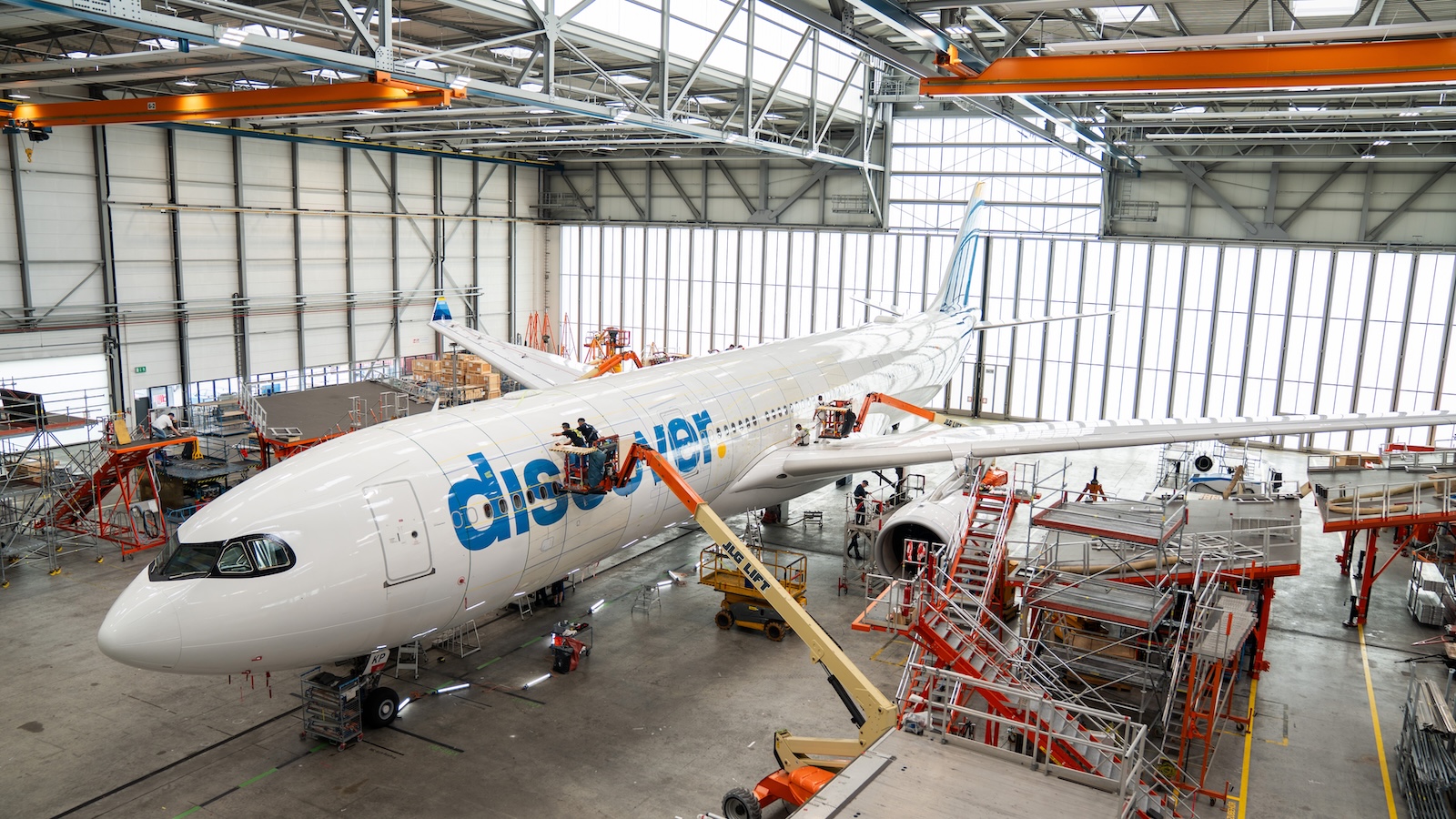
For flight testing as part of the EASA certification process, a Discover Airlines A330 will become the first Airbus aircraft worldwide to be equipped with the drag-reducing AeroSHARK surface film.
Any modification to an aircraft must be approved under aviation regulations before it can enter regular service. For AeroSHARK on the Airbus A330-200 and -300, Lufthansa Technik is therefore seeking a Supplemental Type Certificate (STC) from EASA. The company must demonstrate that the modification complies with the applicable requirements. The certification program includes technical substantiation, ground and flight testing, as well as final trials under real operating conditions.
AeroSHARK: Supplemental Type Certification for the Airbus A330-200 and -300
Lufthansa Technik has now entered the final phase of the supplemental type certification process for its sharkskin-inspired surface film on the Airbus A330-200 and -300. Before and after the modification at Elbe Flugzeugwerke in Dresden, the Discover Airlines long-haul aircraft will undergo several weeks of flight testing.
AeroSHARK is currently certified for the Boeing 777F, 777-300ER and 777-200ER. Following its certified application on the Boeing 777, the Airbus A330 — the world’s second-most delivered long-haul aircraft type — is now the next aircraft family in the certification program.
Grazia Vittadini, Chief Technology Officer of the Lufthansa Group, says: “AeroSHARK is an excellent example of how innovations from within the Lufthansa Group can make a tangible contribution to greater efficiency and lower emissions. With the planned certification for the Airbus A330ceo, we are opening up the potential of another significant segment of the global long-haul fleet.”
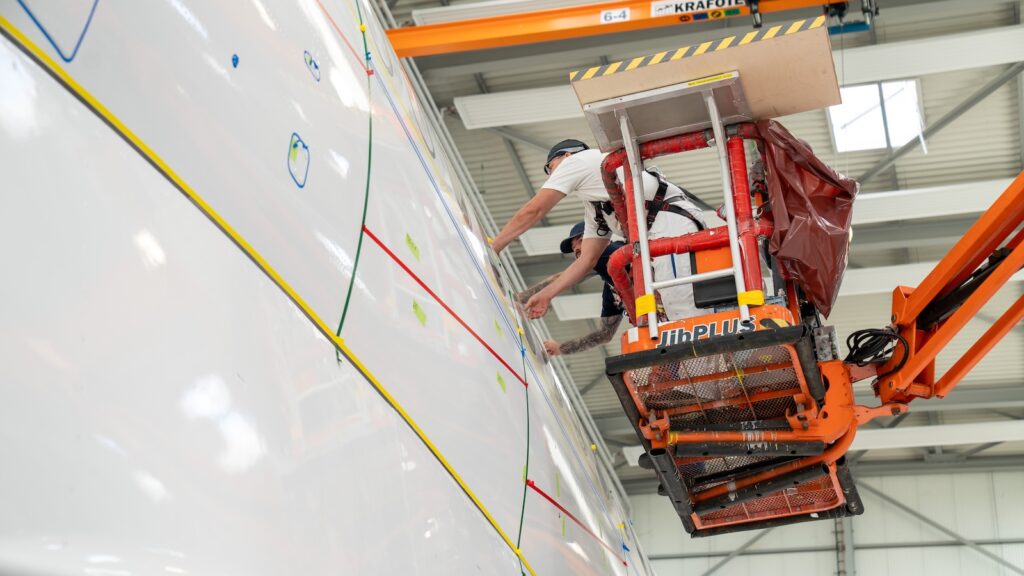
What is AeroSHARK?
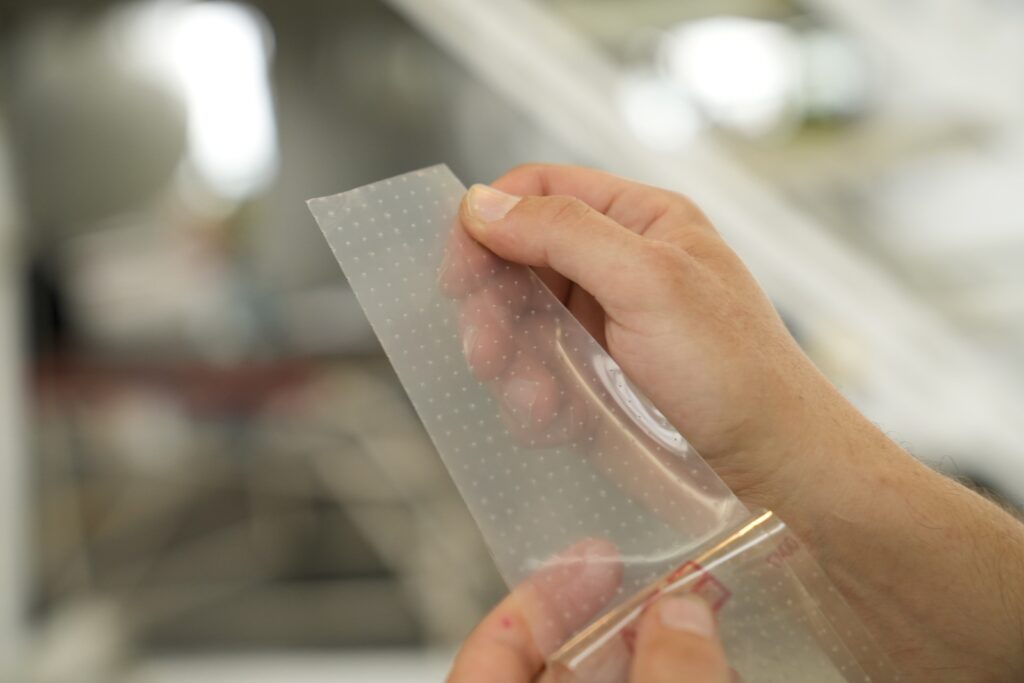
AeroSHARK is a surface film jointly developed by Lufthansa Technik and BASF and inspired by the structure of sharkskin. It optimizes airflow over the aircraft fuselage and engine nacelles, helping to reduce fuel consumption and, consequently, CO₂ emissions.
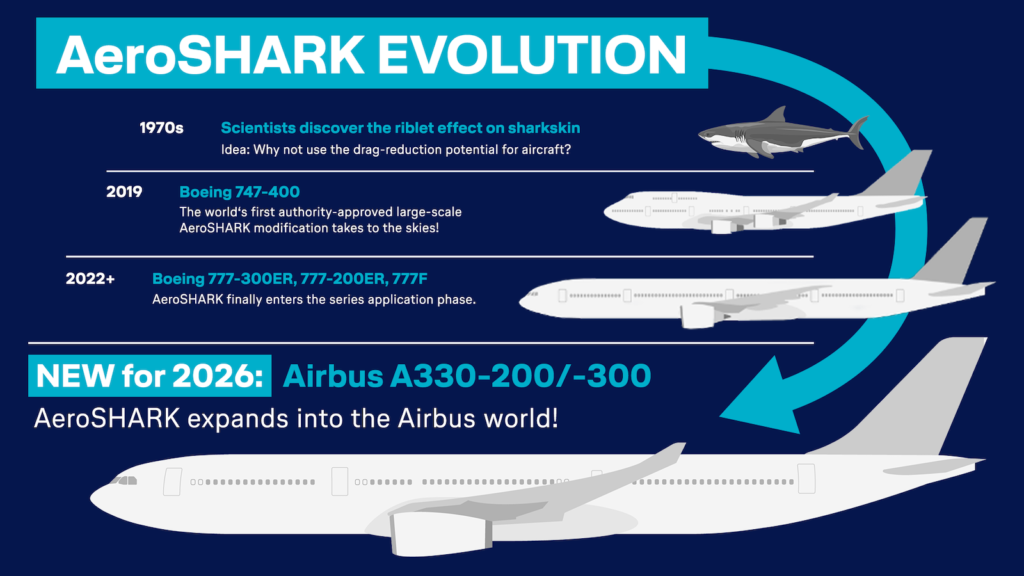
How does AeroSHARK work?
Sharkskin features fine grooves aligned with the direction of flow, known as riblets. They reduce skin-friction drag and improve flow characteristics in water. AeroSHARK transfers this principle to aviation: the surface film features riblets only around 50 micrometers high, precisely aligned with the airflow.
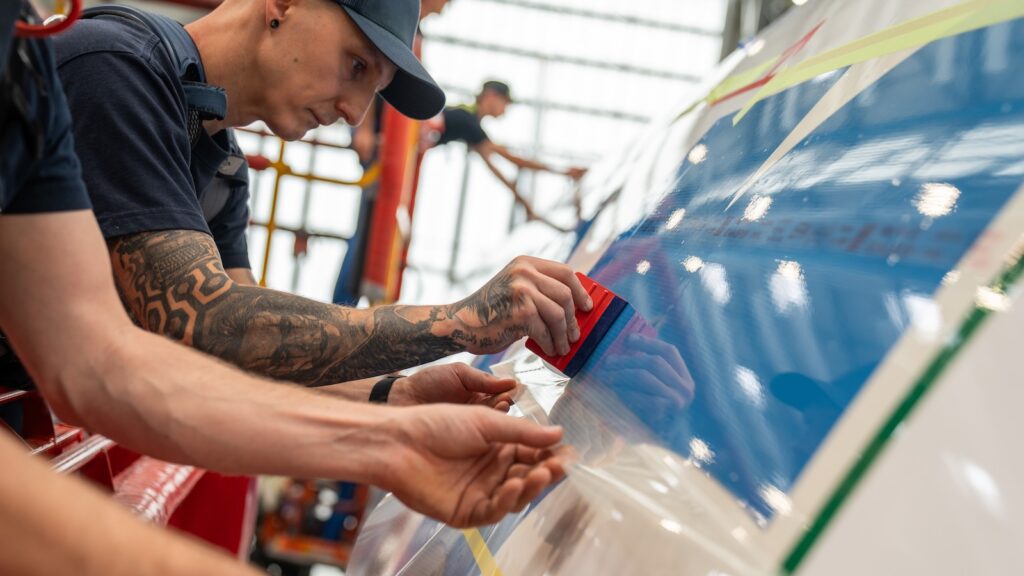
Applied to the fuselage and engine nacelles, the film reduces aerodynamic drag in flight. The technology is currently designed to cut fuel consumption and CO₂ emissions by around one percent per flight.
By August 2026, the Lufthansa Group had already equipped 22 aircraft with AeroSHARK, according to the company. Its AeroSHARK fleet is said to save around 19 tonnes of kerosene and approximately 60 tonnes of CO₂ every day.
Images: Lufthansa Technik