
Translation note: This article was translated with the assistance of AI.
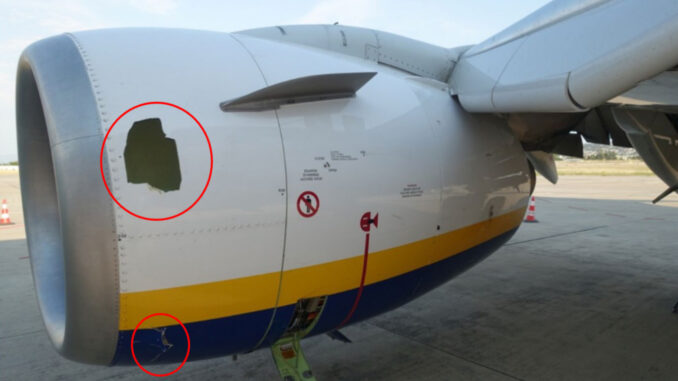
It was a dramatic few minutes aboard Ryanair flight FR1879, operated by Ryanair subsidiary Malta Air. During the climb from Thessaloniki to Memmingen, a fan blade fractured in the Boeing 737-800’s right engine. Debris damaged the fuselage and shattered a cabin window. The resulting sudden depressurization left a passenger partially lodged in the damaged window opening. Fellow passengers managed to pull him back into the cabin. He suffered serious injuries. The July 10, 2026, incident has now prompted regulatory action. The European Union Aviation Safety Agency (EASA) is preparing mandatory additional inspections of CFM56-7B engines. A corresponding proposal was published on October 26.
EASA Plans Additional Visual Inspections of CFM56-7B Engines
With the publication of Proposed Airworthiness Directive (PAD) 26-130 on October 26, 2026, EASA is addressing a potential safety risk involving CFM56-7B engines. Developed by CFM International, these engines power Boeing 737 Next Generation (737 NG) aircraft.
The proposal calls for a one-time visual inspection of all fan blades while the engines remain installed on the aircraft. These on-wing inspections would have to be completed within 400 flight cycles or 90 days after the final airworthiness directive takes effect, whichever occurs first.
The proposed requirements are based on CFM Service Bulletin 72-1119, dated September 8, 2026. If discrepancies are found during an inspection, the applicable corrective actions specified in the service bulletin would have to be carried out. The findings would also have to be reported to the engine manufacturer. Certain inspections already performed may be accepted as an equivalent means of compliance.
The proposal is currently open for consultation, with comments due by November 23, 2026. No final, mandatory airworthiness directive has yet been issued.
Fan Blade Failure Damaged Boeing 737 Fuselage and Cabin Window
The proposed measures follow a serious incident on July 10, 2026. A Boeing 737-800 operated by Ryanair subsidiary Malta Air was performing flight FR1879 from Thessaloniki to Memmingen when severe vibrations developed in its right CFM56-7B26 engine at approximately 16,000 feet during the climb. Shortly afterward, the crew heard a loud bang.
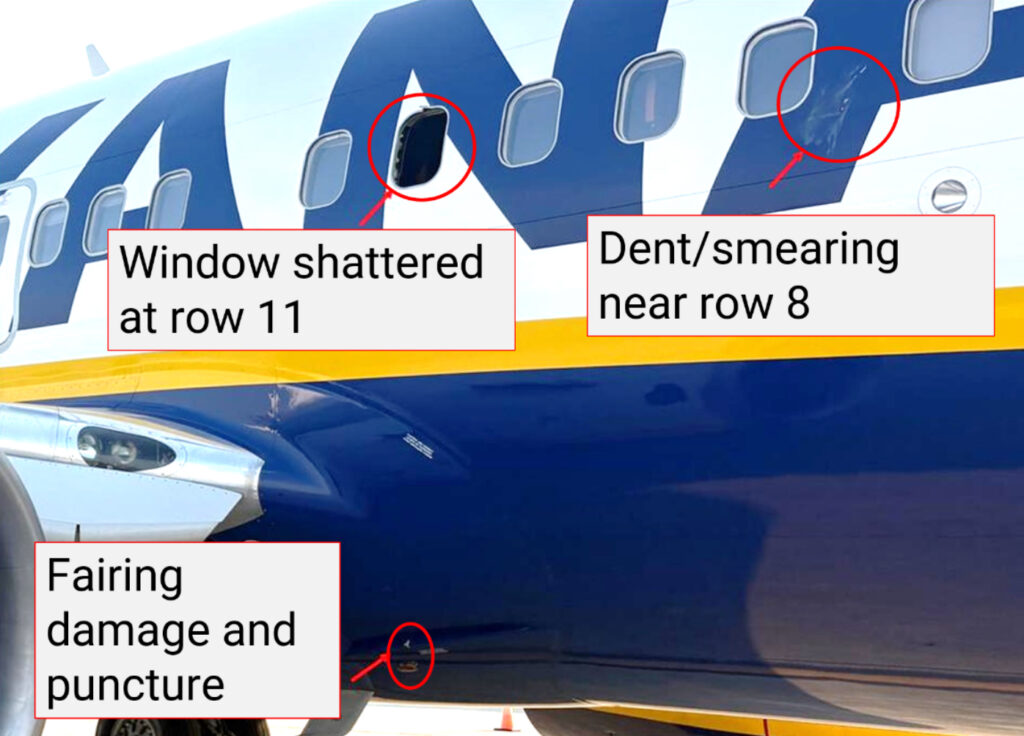
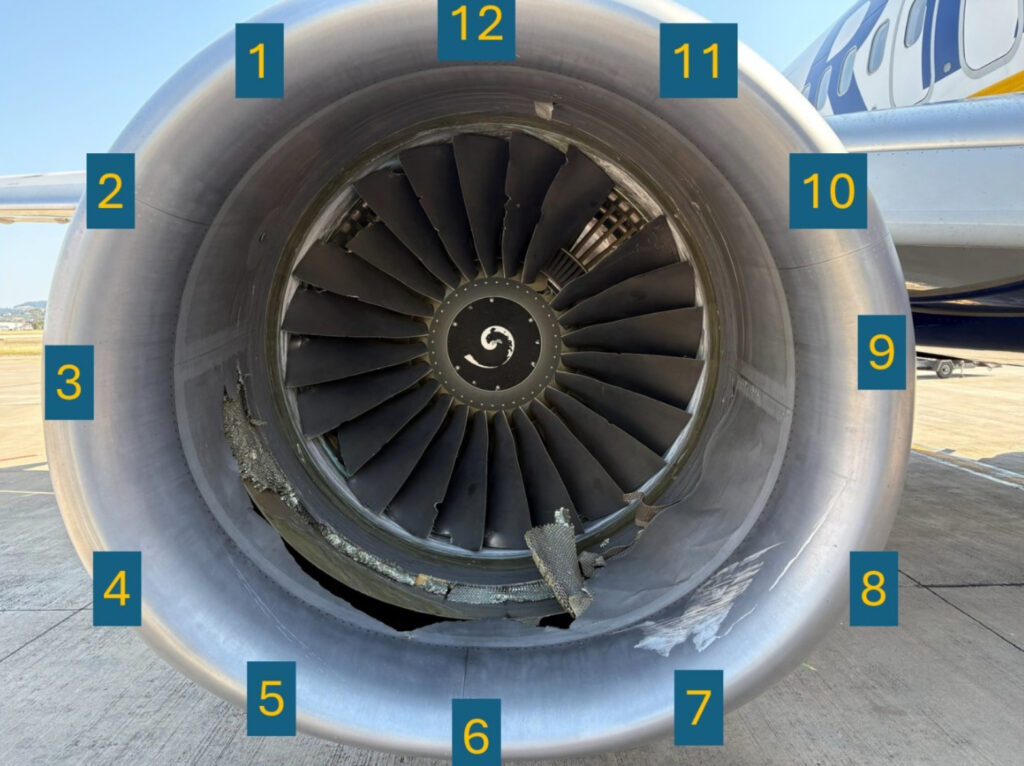
According to the preliminary investigation report issued by the US National Transportation Safety Board (NTSB), a fan blade fractured at its root. The blade was initially contained by the engine case, but debris subsequently escaped forward, damaging the aircraft’s structure and a cabin window at row 11.
The damage caused a sudden loss of cabin pressure. One passenger became partially lodged in the destroyed window opening. Other passengers pulled the seriously injured man back into the cabin. The flight crew initiated an emergency descent, shut down the damaged engine, and returned to Thessaloniki, where the aircraft landed safely.
Evidence of Metal Fatigue Despite Previous Ultrasonic Inspections
During their examination of the fractured fan blade, NTSB investigators identified features consistent with fatigue cracking at the blade root. Microscopic examination revealed evidence of high-amplitude fatigue (HAF), a form of fatigue associated with repeated loading at relatively high stress amplitudes.
The fan blades had last undergone ultrasonic inspection on May 24, 2026, just 253 flight cycles before the incident. No discrepancies were detected at that time.
The investigation into the final cause of the incident remains ongoing. With the proposed on-wing inspections, EASA intends to introduce additional checks across the widely used CFM56-7B engine family.