
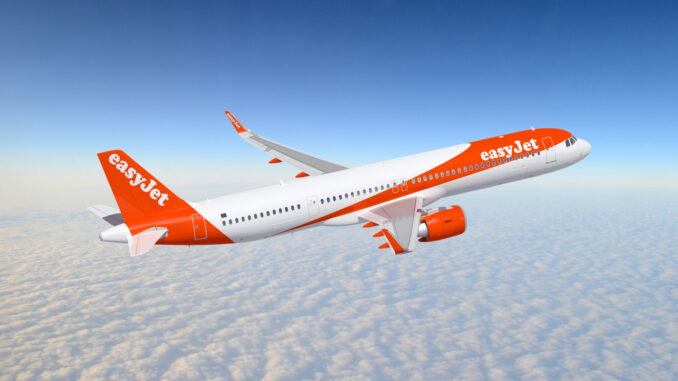
The Airbus A320 is one of the world’s most widely used commercial aircraft, but its weight cannot be described by one single figure.
For the current A320neo, Airbus lists a maximum take-off weight of 79.0 tonnes. Maximum ramp weight is 79.4 tonnes, maximum landing weight is 68.4 tonnes, and maximum zero fuel weight is 65.3 tonnes.
Why does an A320 not always weigh the same?
Passengers, baggage, cargo and fuel all change the aircraft’s mass. A short European sector requires considerably less fuel than a flight approaching the aircraft’s maximum range.
Airbus also offers different certified weight variants. Its technical aircraft documentation lists multiple A320neo configurations with different approved weights, meaning that not every A320 is necessarily certified for the highest possible limit.
Operating empty weight also depends on the individual aircraft. Seat layout, galleys, lavatories and optional equipment all affect the final mass.
79 tonnes does not mean every A320 takes off at 79 tonnes
MTOW is an upper limit, not a typical departure weight. Operational conditions may require an aircraft to depart lighter.
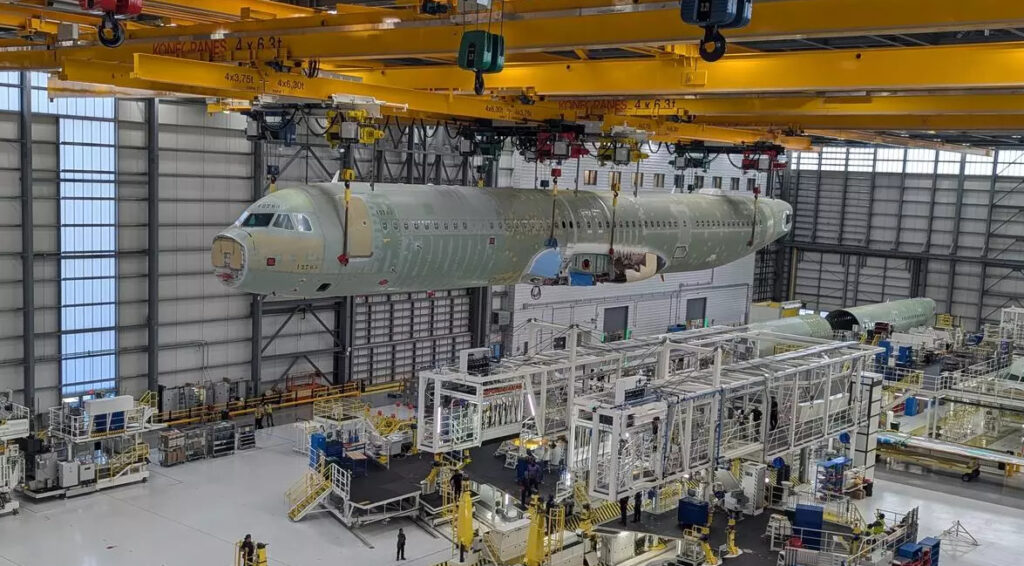
Temperature, airport elevation, runway length, runway slope, wind and runway condition all affect take-off performance. EASA operational rules require these factors to be considered when determining the permissible take-off mass.
Weight connects payload and range
Fuel itself has weight. Increasing range therefore means carrying more fuel, which can reduce the mass available for passengers, baggage and cargo.
Airbus payload-range documentation illustrates this trade-off. At longer ranges, payload eventually has to be reduced to allow additional fuel to be carried.
The short answer is therefore: an A320neo can weigh up to about 79 tonnes at take-off, but its actual weight depends on configuration, payload, fuel and operational conditions.
Read more:
Empty Weight vs. MTOW: Which Aircraft Weight Figures Really Matter?
How Much Does a Boeing 737 Weigh? Comparing the 737-800 and 737 MAX
Images: Airbus